U.S. Navy Settles Hazardous Waste Violations at its Patuxent River Naval Air Station
PHILADELPHIA (Oct. 23, 2012) — The U.S. Navy has agreed to pay a $38,500 penalty to settle alleged hazardous waste violations at the Naval Air Station Patuxent River, located at 22268 Cedar Point Road in Patuxent River, Md.
This settlement resolves alleged violations alleged by EPA of the Resource Conservation and Recovery Act (RCRA), the federal law governing the treatment, storage, and disposal of hazardous waste. RCRA is designed to protect public health and the environment, and avoid costly cleanups, by requiring the safe, environmentally sound storage and disposal of hazardous waste.
Following an EPA inspection, the U.S. Navy was cited for allegedly failing to determine whether waste was hazardous, failing to maintain aisle space to allow for the movement of personnel and fire protection equipment, failing to conduct weekly inspections of waste containers for leaks and deterioration, failing to mark each container with a date and whether it contained hazardous waste, failing to keep hazardous waste containers closed during storage, and failing to properly maintain leak detection and spill prevention equipment on underground storage tanks.
The violations were found in 11 buildings including: the public works transportation, the hazmat warehouse, the Webster field annex, hangar, fleet readiness center, and the materials lab.
The $38,500 settlement penalty reflects the Navy’s cooperation in resolving this matter. The Navy has certified its compliance with applicable hazardous waste requirements.
Military Installations Subject to RCRA Regulations?
Are the military installations of the US Government subject to the US EPA regulations for hazardous waste derived from the Resource Conservation and Recovery Act (RCRA)? Read on…
Maryland Air National Guard Settles Hazardous Waste Violations at Baltimore Facility
PHILADELPHIA (Oct. 18, 2012) — In a consent agreement with the U.S. Environmental Protection Agency, the Maryland Air National Guard (MDANG), 175th Wing, has agreed to pay a $75,000 penalty to settle alleged violations of hazardous waste regulations at its facility at 2701 Eastern Blvd., Baltimore, Md.
EPA cited MDANG for violating the Resource Conservation and Recovery Act (RCRA), the federal law governing the treatment, storage, and disposal of hazardous waste. RCRA is designed to protect public health and the environment, and avoid costly cleanups, by requiring the safe, environmentally sound storage and disposal of hazardous waste.
The consent agreement resolves alleged violations discovered in an April 2011 inspection of the facility. According to EPA, MDANG stored hazardous waste for more than 90 days without a RCRA hazardous waste permit or interim status, failed to provide annual hazardous waste training to some of its employees for a three-year period, and violated RCRA rules on labeling and recordkeeping. The wastes involved in these alleged violations include lubricants, paints, sealants, cleaning solutions and adhesive wastes. These wastes are hazardous because they exhibited the characteristics of being ignitable, corrosive or toxic due to chromium, methyl ethyl ketone or other compounds. (more…)
U.S. Navy Settles Hazardous Waste Violations at its Patuxent River Naval Air Station
PHILADELPHIA (Oct. 23, 2012) — The U.S. Navy has agreed to pay a $38,500 penalty to settle alleged hazardous waste violations at the Naval Air Station Patuxent River, located at 22268 Cedar Point Road in Patuxent River, Md.
This settlement resolves alleged violations alleged by EPA of the Resource Conservation and Recovery Act (RCRA), the federal law governing the treatment, storage, and disposal of hazardous waste. RCRA is designed to protect public health and the environment, and avoid costly cleanups, by requiring the safe, environmentally sound storage and disposal of hazardous waste.
Following an EPA inspection, the U.S. Navy was cited for allegedly failing to determine whether waste was hazardous, failing to maintain aisle space to allow for the movement of personnel and fire protection equipment, failing to conduct weekly inspections of waste containers for leaks and deterioration, failing to mark each container with a date and whether it contained hazardous waste, failing to keep hazardous waste containers closed during storage, and failing to properly maintain leak detection and spill prevention equipment on underground storage tanks.
The violations were found in 11 buildings including: the public works transportation, the hazmat warehouse, the Webster field annex, hangar, fleet readiness center, and the materials lab. (more…).
Many people are unaware that the US EPA’s hazardous waste regulations under RCRA apply to military installations of the US Government the same way they apply to any other business in the US. The US EPA is serious about its mandate to protect the environment and will not hesitate to inspect, cite, and fine a military installation if it finds violations of the RCRA regulations. The basis for US EPA ‘s authority over military installations is derived from the Federal Facilities Compliance Act of 1992. Read my article for a more thorough understanding of Military Munitions, RCRA, and the Federal Facilities Compliance Act of 1992.
Whether you are a business or a government agency (Federal, State, County, or Municipal) you are subject to the hazardous waste regulations of the US EPA. Compliance requires knowledge and the right tools to do the job. Both of these, and a lot more, you can get from my training services. Either in Public Workshops or On-Site. Contact me for your free training consultation.
The Basis for a Hazardous Waste Determination
40 CFR 262.11 requires a hazardous waste determination be completed by all generators of solid waste for all waste they generate (read this article on the Hazardous Waste Determination). To complete the determination may require a combination of samples analysis and application of your knowledge of the waste. It is important to note that the regulations do not specify, nor require, one of these methods of determination (analysis-based v. knowledge-based) over the other.
An outline for the process of hazardous waste determination can be found at 40 CFR 262.11, it reads:
Step 1: Determine if the solid waste is excluded from regulation as a hazardous waste per 40 CFR 261.4, and;
Step 2: Determine if the waste is a listed hazardous waste pursuant to 40 CFR 261, Subpart D.
The regulations do not specify a method to make the determinations in steps 1 & 2, however, it is assumed that both will rely on the generator’s knowledge of his waste and the applicable regulations (ie. knowledge-based) since there are no test methods available for the determination of a regulatory exclusion (Step 1) or for the presence of a listed hazardous waste (Step 2).
Step 3: Determine if the waste is a characteristic hazardous waste pursuant to 40 CFR 261, Subpart C. The regulations do specify that this determination may be made by one of two methods:
Analysis-Based.
Knowledge-Based.
An analysis-based hazardous waste determination requires you to collect a representative sample of the solid waste and submit it to an accredited lab for analysis by an approved test method.
The performance of a knowledge-based hazardous waste determination relies on your familiarity with the processes generating the waste and/or your ability to gather any additional information necessary to make the determination. Sources of information in order to make your hazardous waste determination may include:
Material Safety Data Sheets (MSDS).
Information from employees or contractors involved in the process of generating the waste.
Information from suppliers or vendors.
Many generators of hazardous waste are surprised to learn that an analysis-based method is not required in order to determine the presence of a characteristic hazardous waste. US EPA assumes that as the generator of a solid waste you have available the information necessary to make the hazardous waste determination without resorting to analysis of a sample of the waste. However, in many cases, such as flash point analysis for the determination of the characteristic of Ignitability, an analysis-based method is inexpensive and may carry more weight with an inspector.
Regardless of the method used to make your hazardous waste determination, 40 CFR 262.40(c) requires you to keep records of any test results, waste analyses, or other information for at least three years from the date that the waste was last sent to on-site or off-site treatment, storage, or disposal, so if your determination is knowledge-based, you must still have some form of documentation to back-up your results.
The US EPA does not specify a method for the hazardous waste determination, it does however hold you as the generator of the waste solely responsible for the correct completion of the determination (RO 13570).
Exceptions to the Hazardous Materials Regulations for the Transportation of Aqueous Solutions of Alcohol
In an earlier article I discussed the exception to the Hazardous Materials Regulations of the US DOT (HMR) available for the transportation in commerce of certain alcoholic beverages that are designed for consumption and not for industrial use. There is also an exception to the HMR available for the transportation in commerce of aqueous solutions of alcohol that are not intended for consumption and would instead – I assume – have an industrial or commercial application.
The exception for aqueous solutions of alcohol, found at 49 CFR 173.150(e), allows for two options provided the materials is an aqueous solution containing ≤24% alcohol by volume and no other hazardous material…
May be re-classed as a combustible liquid. The Combustible Liquid Exception, if you haven’t heard of it before, provides relief from all of the HMR if certain conditions are met. This article of mine reviews the Combustible Liquid Exception to the HMR.
Is not subject to the requirements of the HMR if it contains ≥50% water.
And what does “not subject to the requirements of the HMR” mean in practice? Well, it means none of the below is necessary for your shipment:
Shipping papers
Placards
Labels
Markings
Specification packaging
HazMat Employee training
Registration with the PHMSA
Like many other exceptions to the HMR, this one is allowed by the US DOT because the Agency feels the transportation of this material will not pose an unreasonable risk to human health or the environment when transported in commerce. Those materials that it determines to pose an unreasonable risk are subject to the full regulations of the HMR. HazMat Employee training is a good way for you to learn about the transportation of hazardous materials, exceptions to the HMR, and your responsibilities as a HazMat Employer and a shipper of hazardous materials. Contact me for a free consultation of your training needs.
Exceptions to the Hazardous Materials Regulations for the Transportation of Alcoholic Beverages – 49 CFR 173.150(d)
Don’t see any placards; do you?
You’ve probably noticed that the various alcohol distribution trucks you see on the road do not display placards for flammable liquids as you might expect; why? The answer is the exception to the Hazardous Materials Regulations of the USDOT/PHMSA for the transportation in commerce of alcoholic beverages found at 49 CFR 173.150(d).
49 CFR 173.150(d) reads:
Alcoholic beverages. (1) An alcoholic beverage (wine and distilled spirits as defined in 27 CFR 4.10 and 5.11), when transported via motor vehicle, vessel, or rail, is not subject to the requirements of this subchapter if the alcoholic beverage:
(i) Contains 24 percent or less alcohol by volume;
(ii) Is contained in an inner packaging of 5 L (1.3 gallons) or less; or
(iii) Is a Packing Group III alcoholic beverage contained in a packaging 250 liters (66 gallons) or less;
(2) An alcoholic beverage (wine and distilled spirits as defined in 27 CFR 4.10 and 5.11), when transported via aircraft, is not subject to the requirements of this subchapter if the alcoholic beverage:
(i) Contains 24 percent or less alcohol by volume;
(ii) For transportation aboard a passenger-carrying aircraft, contains more than 24% but not more than 70% alcohol by volume when in unopened retail packagings not exceeding 5 liters (1.3 gallons) carried in carry-on or checked baggage, with a total net quantity per person of 5 liters (1.3) gallons (See §175.10(a)(4) of this subchapter); or
(iii) When carried as cargo, contains more than 24% but not more than 70% alcohol by volume in an inner packaging not exceeding 5 L (1.3 gallons).
So, we must first determine if our HazMat meets the definition of an alcoholic beverage for the purposes of this exception. An alcoholic beverage must be one of the following two:
Wine as defined at 27 CFR 4.10.
Drink – and ship HazMat – responsibly!
Or…
Distilled spirits as defined at 27 CFR 5.11.
Definitions for both are included at the end of this article.
So, if it is an alcoholic beverage, it is not subject to the HMR (shipping papers, placards, labels, markings, specification packaging, etc.) if it…
Contains ≤24% alcohol by volume.
Or…
Is in an inner packaging of 5L (1.3 gallons) or less.
Or…
Is a Packing Group III alcoholic beverage in a packaging of ≤250L (66 gallons).
Two USDOT/PHMSA interpretations confirm that this exception may be used for alcoholic beverages that meet any one of the above three conditions: §173.150(d)(1)(i), (ii), or (iii). (10-0014, 09-0140) Though both of the letters of interpretation are answering question about shipping alcoholic beverages by air, they still make reference to the three conditions of §173.150(d)(1).
Note a subtle but important distinction in the packaging type of these conditions. §173.150(d)(1)(ii) refers to an “inner packaging” whereas §173.150(d)(1)(iii) refers simply to a “packaging”. The use of the term inner packaging refers to a container that will be placed into outer packaging forming what’s known as combination packaging for its transportation. An example of this would be a 1 gallon jug of wine (inner packaging) packed into a wooden crate (outer packaging or just “packaging”) for shipment . §173.150(d)(1)(ii) doesn’t limit the volume of the outer packaging, so it could be much more than 66 gallons.
The condition of §173.150(d)(1)(iii) does not set a limit on the alcohol content or the volume of the inner packaging but it does limit its use to a Packing Group III Flammable Liquid, the least dangerous of the flammable liquids, and limits the volume of the entire packaging to no more than 66 gallons.
The transportation of an alcoholic beverage by air (either passenger or cargo) may be subject to an exception found at 173.150(d)(2). That article will have to wait until a later day, however. If you’re interested just ask me and I’ll look into it.
If your HazMat is not an alcoholic beverage designed for consumption, there may still be an exception available for its transportation if it meets the definition of an aqueous solution of alcohol. Read this article for an exception available for the transportation of aqueous solutions of alcohol.
Definitions:
Wine. (1) Wine as defined in section 610 and section 617 of the Revenue Act of 1918 (26 U.S.C. 5381-5392), only if for nonindustrial use and containing not less than 7 percent and not more than 24 percent of alcohol by volume; and
(2) Other alcoholic beverages not so defined, but made in the manner of wine, including sparkling and carbonated wine, wine made from condensed grape must, wine made from other agricultural products than the juice of sound, ripe grapes, imitation wine, compounds sold as wine, vermouth, cider, perry, and sake, only if for nonindustrial use and containing not less than 7 percent and not more than 24 percent of alcohol by volume.
Distilled spirits. Ethyl alcohol, hydrated oxide of ethyl, spirits of wine, whisky, rum, brandy, gin, and other distilled spirits, including all dilutions and mixtures thereof, for nonindustrial use. The term “distilled spirits” shall not include mixtures containing wine, bottled at 48 degrees of proof or less, if the mixture contains more than 50 percent wine on a proof gallon basis.
Note that while wine has a defined alcohol content (≥7% and ≤24%) distilled spirits do not. Both, however, are meant for “nonindustrial use”.
You may not have anything to do with the shipment of alcoholic beverages, but this article illustrates the fact that hazardous materials, the HMR, and exceptions to the HMR surround us everyday. Many materials we regard as common: fuel, wine, batteries, cleaners, and more, are all hazardous materials regulated in some way by the USDOT/PHMSA when transported in commerce. This includes the hazardous materials, including hazardous waste, received at or shipped from your facility. Contact me for a free consultation of your training needs.
Using a “Permanent” Shipping Paper for the Transportation of Hazardous Materials
Purpose:
The purpose of this article is to identify and explain the regulations of USDOT/PHMSA for the use of a permanent shipping paper to describe a consignment of hazardous materials in transportation by motor vehicle.
Before we Begin:
The Pipeline and Hazardous Materials Safety Administration within the U.S. Department of Transportation (USDOT/PHMSA) creates and enforces the Hazardous Materials Regulations (HMR) for the transportation of hazardous materials (HazMat) in commerce to, from, or through the U.S. by all modes of transportation: motor vehicle, aircraft, railcar, or vessel.
Scope and Applicability:
The regulations addressed in this article apply solely to the transportation of HazMat by motor vehicle within the U.S.
Introduction:
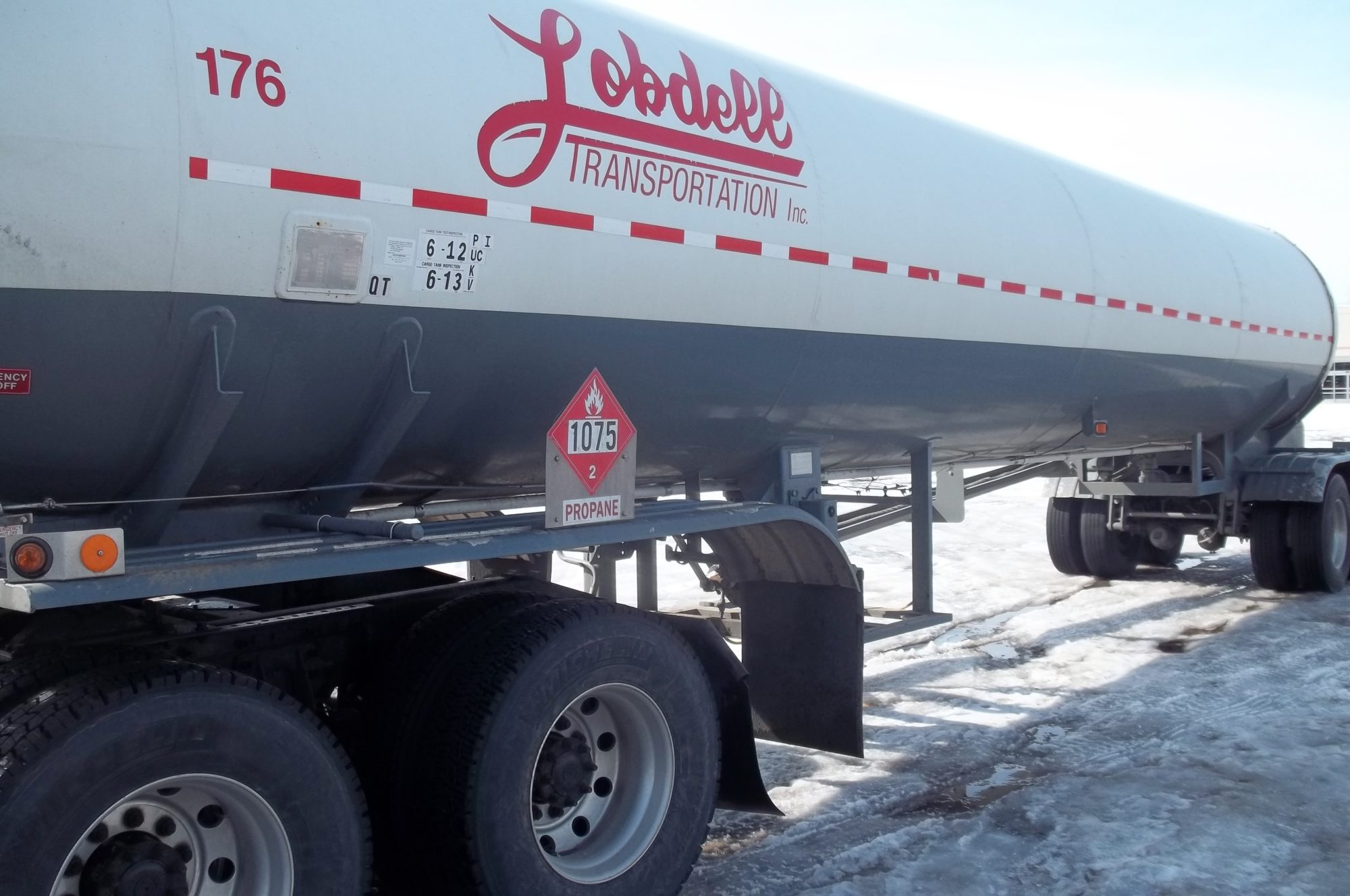
There are some situations where the use of a shipping paper for each shipment of a hazardous material is burdensome and, as it turns out, unnecessary. For example, a company may use its own trucks and drivers to deliver Liquified Petroleum Gas (LPG) to several customer locations in a single day. The driver starts with a large volume of HazMat which declines in volume as deliveries are made at each client site. The hazardous material (LPG) remains the same, the only thing that changes is the reduction in volume.
In the above example, may a carrier use a single shipping paper, without change, for multiple shipments of one or more hazardous materials (assuming each separate hazardous material has the same shipping name and identification number) instead of using a separate shipping paper for each delivery? The answer is yes. Such a document is known as a Permanent” Shipping Paper and is allowed pursuant to 49 CFR 172.201(e):
A motor carrier (as defined in §390.5 of subchapter B of chapter III of subtitle B) using a shipping paper without change for multiple shipments of one or more hazardous materials having the same shipping name and identification number may retain a single copy of the shipping paper, instead of a copy for each shipment made, if the carrier also retains a record of each shipment made, to include shipping name, identification number, quantity transported, and date of shipment.
This interpretation letter from the PHMSA explains further its acceptance of the use of a “Permanent” Shipping Paper based on §172.201(e) (03-0003).
If using a “Permanent” Shipping Paper, the carrier must retain a record of each shipment made. This could be a delivery or billing receipt or some other company-specific document. Pursuant to 49 CFR 172.201(e) the record for each shipment must include the following:
Shipping name.
Identification number.
Quantity transported.
Date of shipment.
As LOI 03-0003 goes on to explain, the delivery of a partial amount of the hazardous material does not require a change to the “Permanent” Shipping Paper but the pick up of additional quantities of hazardous materials that are not described on the shipping paper does require a modification to the “Permanent” Shipping Paper if the total quantity on the vehicle ever exceeds the amount described on the shipping paper.
The use of a “Permanent” Shipping Paper could be a great benefit to a carrier who makes a large number of deliveries of the same hazardous material(s). One of the things I enjoy most about training is bringing something like this to the attention of someone in the industry who needs to know. Contact me about my training services and see what you can learn that will benefit you.
Before you Go:
Ohio EPA to Change the Annual Hazardous Waste Report to Biennial
The Biennial Hazardous Waste Report (due March 1st of every even numbered year for the previous calendar year) is a requirement of the US Environmental Protection Agency for the following:
Treatment, Storage, and Disposal Facilities (TSDF’s) of hazardous waste.
Large Quantity Generators (LQG’s) of hazardous waste.
Small Quantity Generators (SQG’s) of hazardous waste who receive a notice to submit the Report.
Until recently Ohio was a state with an approved hazardous waste program that required the Hazardous Waste Report to be submitted annually. That changed with Ohio Senate Bill 294 which was signed into law by Governor John Kasich in early June and became effective September 5, 2012. The Ohio EPA does a good job of summarizing how this will impact regulated industry within the state, so I’ll quote the website.
Generator and Facility Report Frequency will change from Annual to Biennial
Senate Bill 294 was signed by the Governor in early June, and becomes effective September 5, 2012. One component of that bill allows the Director of Ohio EPA to report certain hazardous waste management data to the Governor biennially now instead of annually. Ohio EPA intends to change certain annual reporting requirements to biennial reporting requirements to correspond with the federal program.
Under these intended rule changes, your “Hazardous Waste Annual Report” currently due March 1, 2013, for 2012 data would not be required to be submitted to Ohio EPA. Your first biennial report would be due March 1, 2014, for 2013 data.
However, if you normally submit other reports/data with your annual report that are not part of that report (e.g., the ground water monitoring annual report required by OAC 3745-65-94), those other reports/data will maintain their annual reporting requirement.
It is our goal to have annual to biennial rule amendments effective prior to March 1, 2013. If the process is delayed for some reason, Ohio EPA will use enforcement discretion and you will not be held to the annual report requirement that is changing to biennial.
So there you have it, right from the Ohio EPA website. While this will reduce the reporting requirement for hazardous waste generators in Ohio, it doesn’t affect any other rules applicable to generators of hazardous waste, such as the requirement for Large Quantity Generators of hazardous waste to provide annual training for Facility Personnel who may come into contact with hazardous waste or respond to a hazardous waste emergency. The requirement for training can be found at 3745-65-16 of the Ohio Administrative Code referenced from 3745-52-34(A)(4).
Whether you are located in Ohio or anywhere else in the Union, the hazardous waste regulations of both State and Federal agencies are constantly changing and require you to keep abreast of those changes. Contact me with questions about the hazardous waste regulations in your state or arrange to attend one of my training sessions.
Bayer CropScience LP to Pay $13,900 Penalty for Distribution of Misbranded Pesticides in Missouri
Contact Information: Ben Washburn, 913-551-7364, washburn.ben@epa.gov
(Kansas City, Kan., Oct. 1, 2012) – Bayer CropScience LP has agreed to pay a $13,900 civil penalty to the United States to settle a series of environmental violations related to the distribution of mis-branded pesticides through its facility in Kansas City, Mo.
According to an administrative consent agreement and final order filed by EPA Region 7 in Kansas City, Kan., an inspection of Bayer’s Kansas City facility in November 2011 found that on November 28, 2011, Bayer CropScience shipped a quantity of the pesticide Ethosumesate, without a product label, an EPA registration number, or an EPA producing establishment number.
In December 2011, EPA Region 7 received two Notices of Arrival from Bayer for the importation of two separate shipments due that month of quantities of unregistered Methomyl insecticide for the purpose of producing the product into the registered product Larvin Technical. The label provided by Bayer for the two shipments of the unregistered pesticide contained a false or misleading statement in its “Directions for Use” section.
The labeling deficiencies related to the two pesticides were in violation of the Federal Insecticide, Fungicide and Rodenticide Act (FIFRA), according to the settlement.
The sale or distribution of misbranded or mislabeled pesticides can pose serious risks to human health, plant and animal life, and the environment. Without proper labeling or safety instructions on packaging, users can unintentionally misapply pesticides and may not have adequate information to address needs for first aid in the event of emergency.
As a result of EPA’s enforcement action, Bayer CropScience LP was required to relabel all of the shipments in question. The company has also instituted changes in its practices to prevent similar violations.
To paraphrase 40 CFR 262.11: A person who generates a solid waste must determine if that waste is a hazardous waste using the following method:
Is it excluded from regulation?
Is it a listed hazardous waste?
Is it a characteristic hazardous waste?
An in-depth explanation of the process of the Hazardous Waste Determination will have to wait for another article. The purpose of this article is to make clear who must complete a Hazardous Waste Determination and what it entails. From the simple segment of the regulations above, the US EPA and authorized states have clarified the following:
A “person” is any individual or the business or government entity they represent. This previous article explains this term more in-depth, but rest assured, if you own a business or work for a business or government entity, including the US Military, you are a person in the eyes of the US EPA and therefore subject to the regulations.
The requirement to complete a Hazardous Waste Determination applies to all status of hazardous waste generators.
The requirement for a Large Quantity Generator (LQG) can be found at 40 CFR 262.40(c).
The requirement for a Small Quantity Generator (SQG) can also be found at 40 CFR 262.40(c) referenced from 40 CFR 262.44(a).
And in an interpretation letter, US EPA clarified that the requirement to conduct a Hazardous Waste Determination applies to a Conditionally Exempt Small Quantity Generator (CESQG) as well (RO14030). However, a CESQG is not required to retain records of its Hazardous Waste Determination, though it is a good idea.
If you are a “person” (see #1 above) and if you are any status of hazardous waste generator (see #2 above) then you must complete a Hazardous Waste Determination. It is not an option or a best management practice. You can face serious fines for not completing the Hazardous Waste Determination.
Your Hazardous Waste Determination must be documented and a record of it maintained for at least three years from the last date the waste was sent off-site or remained on-site for treatment, storage, or disposal.
A Hazardous Waste Determination must be made for all solid waste that you generate. This is important, because this extends the requirement to all of your waste, not just the hazardous waste. A solid waste is defined at 40 CFR 261.2 as, “…any discarded material…” not excluded by regulation. The full definition of a solid waste could take several more articles, and may require more research on your part, but suffice to say that if you are going to throw away or recycle a waste from an industrial or commercial process (including government entities) than it is a solid waste. And all solid waste must have a documented record of its Hazardous Waste Determination. I run the risk of repeating myself, but I think it an important enough point, and one I misunderstood in the past, that a documented record of a Hazardous Waste Determination is required for all of the waste you generate, whether hazardous or non-hazardous.
I confess that I am still learning the regulations as I write these articles, answer questions from my trainees, and conduct my training seminars. I don’t think there will ever come a day where I sit back and say that I know it all, and you shouldn’t either. Good training that is reasonably priced and readily available is hard to find, but contact me and I will help you to get the training you need (Hazardous Waste Personnel and HazMat Employee) to come into compliance and stay there.
The Hazardous Materials Description on a Shipping Paper
In an earlier article I explained that a shipping paper may be used for shipments of both hazardous and non-hazardous materials. I also identified the different forms a shipping paper may take, such as: uniform hazardous waste manifest, bill of lading, and others. Though it may appear in many forms, if used for the transportation of a hazardous material (HazMat) all shipping papers must contain a hazardous materials description. The Hazardous Materials Regulations (HMR) of the Pipeline and Hazardous Materials Safety Administration within the U.S. Department of Transportation (USDOT/PHMSA) mandate the information that must be included in the hazardous materials description. These regulations can be found in the HMR at 49 CFR 172.202. A hazardous materials description must include the following:
The identification number shown in column 4 of the Hazardous Materials Table.
The proper shipping name shown in column 2 of the Hazardous Materials Table.
The hazard class or division number.
The Packing Group.
Unless transported by air, the total quantity of HazMat by mass or volume. There are other requirements for transportation by air explained further at §172.202(a)(6).
You may include additional information about the hazardous material on the shipping paper provided it is consistent with the required description. You must take care not to include so much additional information that the purpose of the shipping paper: the communication of the potential hazards of the material, are lost.
§172, Subpart C also identifies other information that must be included on a shipping paper:
Emergency response telephone number [§172.201(d)].
The shipper’s certification (§172.204).
Contact me with any questions you may have about the transportation of hazardous materials by air, highway, vessel, or rail
The purpose of the hazardous materials description on a shipping paper is to inform anyone who comes in contact with the shipment of the potential hazards associated with it. The hazardous materials description does no good, however, if your HazMat Employees are not trained in the ways to interpret that information. My training gives your employees (and you) the tools and the knowledge to perform their jobs safely and in compliance with the regulations.